
Polyester papermaking fabrics
Polyester monofilament fabrics for the forming and drying sections of paper and board machines, woven and seamed to your machine's length and width.
Fabrics by machine section
| Section | Fabric | What it does | Typical service life |
|---|---|---|---|
| Forming (wire) section | Forming fabric | Drains the stock and forms the sheet; sets formation, retention and drainage | 45 – 60 days |
| Press section | Press felt | Base fabric with needled batt; removes water in the press nip and carries the sheet | 40 – 50 days |
| Dryer section | Dryer fabric | Holds the sheet against the dryer cylinders and lets vapour escape | 6 – 18 months |
Service life figures are industry averages and vary with grade, speed and cleaning practice.
Forming fabric structures
| Structure | Yarn systems | Strengths | Trade-offs |
|---|---|---|---|
| Single layer | 1 MD + 1 CD | Lowest cost, easy to clean | Lower fibre support, wear life and seam strength |
| Double layer | 1 MD + 2 CD | Better fibre support, stable, longer life | Higher cost |
| 2.5 layer | 1 MD + 3 CD | Between double and triple layer | — |
| Triple layer (SSB) | 2 MD + 2 – 3 CD, sheet-support binder yarns | Best drainage, formation, retention and stiffness; no delamination | Highest cost, larger void volume |
Finer top layers give a higher fibre support index (FSI) and better formation; coarser bottom layers with larger wear yarns give longer life on abrasive furnish. Typical FSI: heavy-duty coarse fabrics 100 – 130, fine 150 – 180, extra fine 180 – 220.
Dryer fabrics
Woven dryer fabrics
Single layer, double warp and flat-yarn designs. Pin seam or spiral seam for fast installation.
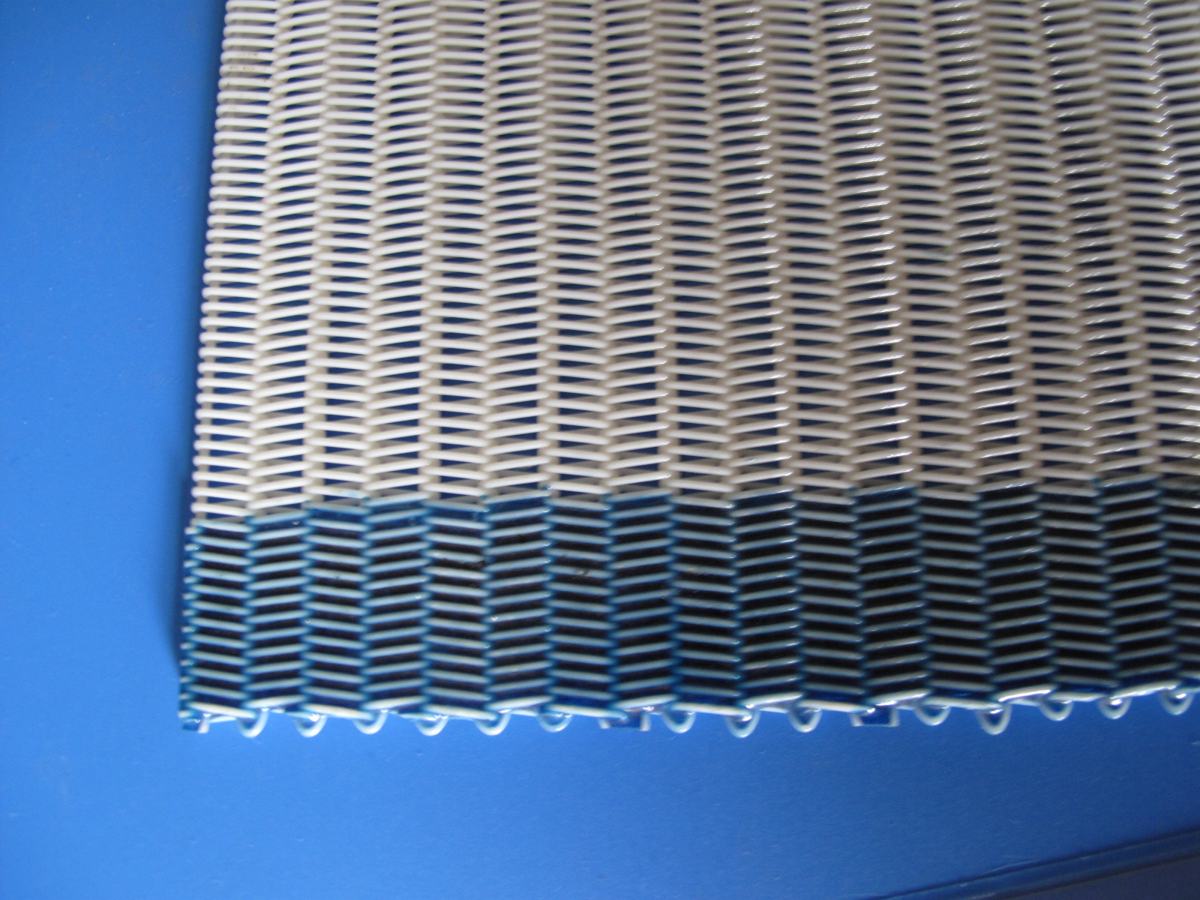
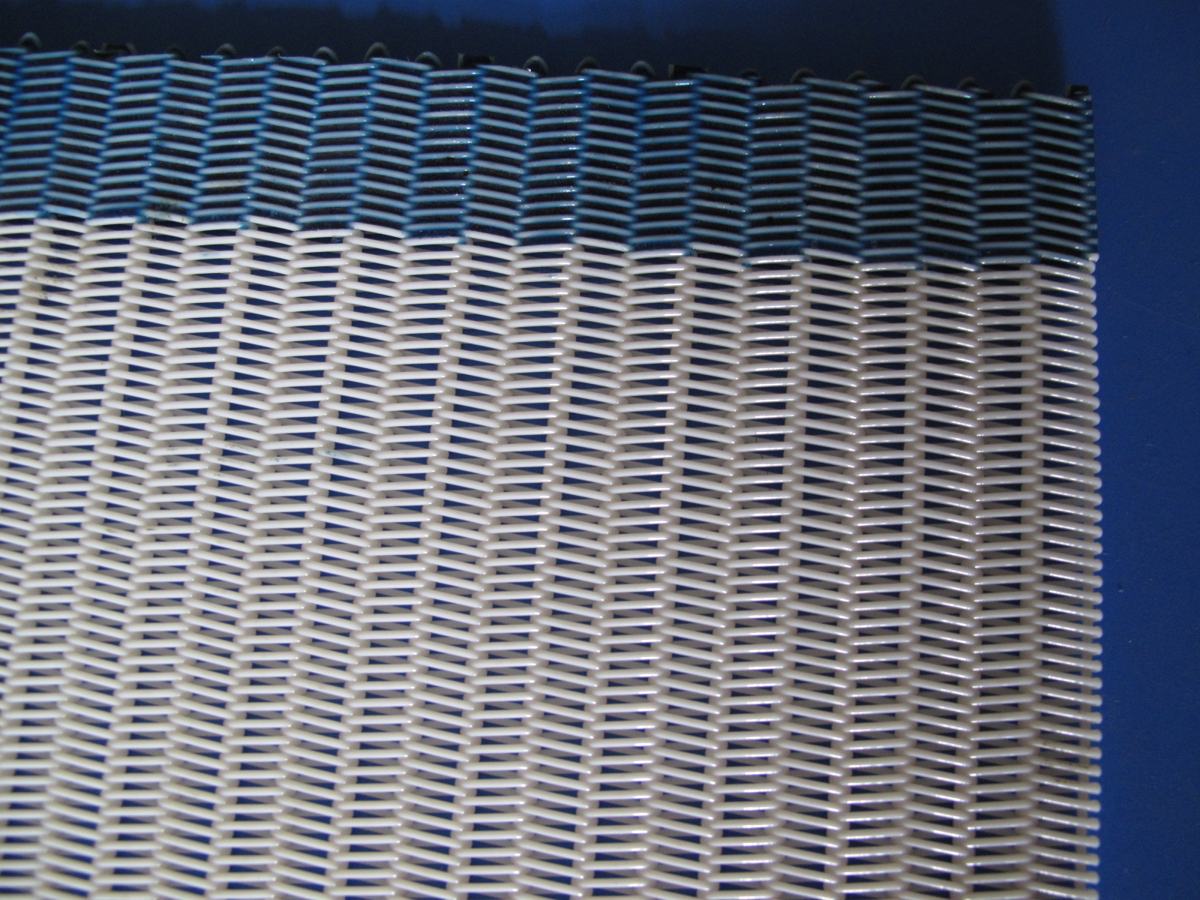
Spiral dryer fabrics
Polyester spirals joined by pintle wires, with optional stuffer yarns to set air permeability. Stable, easy to seam, and any length can be built.
Material by dryer position
| Material | Use |
|---|---|
| PET polyester | Standard dryer positions; the most widely used material |
| Hydrolysis-resistant PET (HR-PET) | Medium-temperature, humid positions |
| PPS | Hot and humid positions; melting point 285 °C, best hydrolysis resistance |
| PET / PPS blend | Balance of cost and hydrolysis resistance |
| PET / PVDF | Anti-contamination designs |
| PA polyamide | Positions with high abrasion |
Air permeability is quoted in CFM (ft³/ft²/min). 1 CFM = 18.3 m³/m²·h by unit conversion. Always state the test standard and pressure drop, for example ASTM D737 at 125 Pa.
What to send us
- Position: forming, press or dryer; top or bottom fabric; former type (fourdrinier, twin wire, hybrid, crescent)
- Fabric length (running length) × width; endless or seamed, and seam type
- Paper grade, basis weight, machine speed, acid or alkaline process
- Target air permeability (with test method), caliper and FSI
- Material requirement, temperature and humidity in the position
- Current fabric make and style, life achieved and how it fails; a sample or label if available
Need a construction we have not listed?
Send the aperture, material and width. We reply with a recommendation, price and lead time.